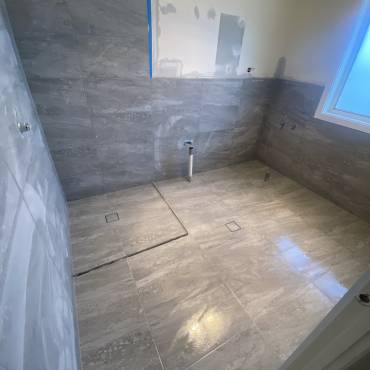
A sound, clean surface
A membrane is only as good as what it's applied to. Surfaces need to be solid, clean and prepared, with gaps and joints dealt with first, so the membrane can bond properly.

Wet-area waterproofing
In a properly constructed wet area, a waterproof membrane beneath the tiles keeps water out of the floors and walls around it. Waterproofing is at the heart of what Gaffneys does, and Paul brings 25 years' experience to wet areas across Wollongong and the Illawarra.
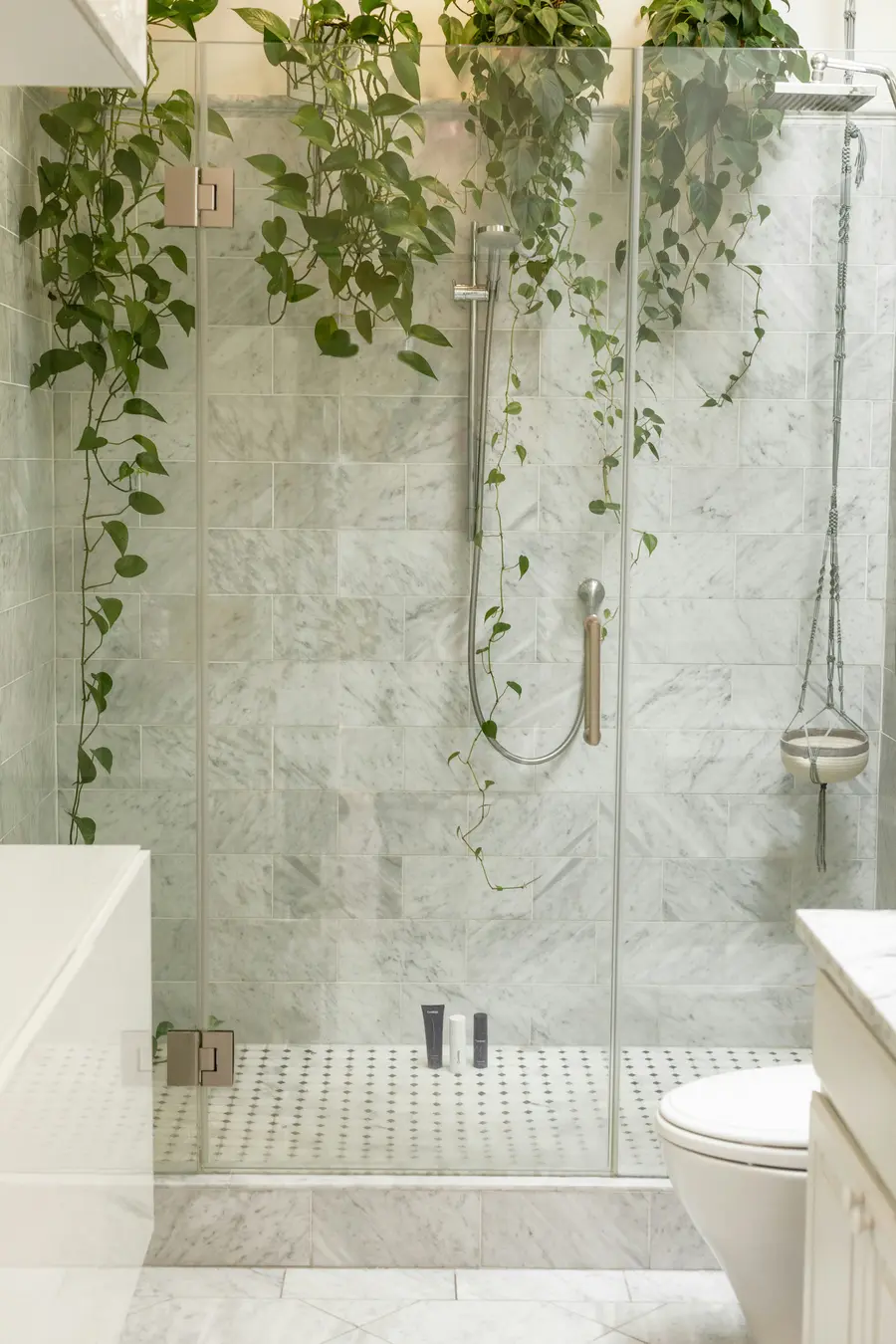 Inspiration image
Beneath the surface
A tiled shower looks like one solid surface, but a properly constructed wet area is built in layers. Move the slider through this simplified example.
Simplified educational example, not a construction detail. The actual arrangement of substrate, screed, adhesive and membrane varies with the waterproofing system and the job.
Use the slider or arrow keys to move down through the layers.
The finished surface you see and clean. Tiles and grout look solid, but they aren't a waterproofing layer on their own. Water can find its way through grout and fine gaps over time.
What the tiles are set into, such as adhesive or a screed bed, depending on the system. On a shower floor, the layers are usually shaped so water falls towards the floor waste. In some systems the membrane sits above this layer, in others below it.
In a properly constructed wet area, this is the layer that does the waterproofing. It's applied across the wet area and carried up the walls where required, so water that gets past the tiles doesn't reach the structure of the home.
The floor and wall structure that the other layers are built on. Whatever the system, it needs to be sound, clean and properly prepared for the waterproofing to do its job.
Why preparation matters
A membrane is only as good as what it's applied to. Surfaces need to be solid, clean and prepared, with gaps and joints dealt with first, so the membrane can bond properly.
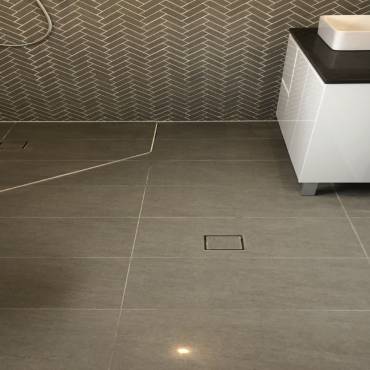
Where there's a floor waste, the floor should fall towards it so water drains instead of pooling. Getting the falls right is part of the groundwork, not something added at the end.
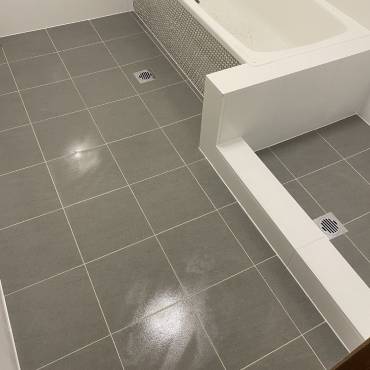
Where walls meet floors, around hobs and baths, and where pipes come through, are the places that take the most care. They're also where problems can start if they're rushed.
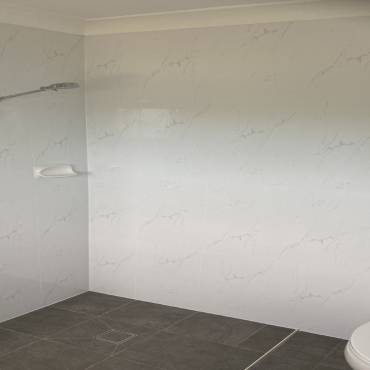
Most membranes need time to cure before tiling starts. How long depends on the product and conditions, and it's one step that shouldn't be hurried.
These photos show genuine Gaffneys jobs at the tiling stage and illustrate the principles above. Waterproofing beneath tiles can't be seen in them, so they aren't shown as proof of it.
Where waterproofing matters
Gaffneys provides waterproofing membranes for showers, bathrooms and wet areas. Every space is different, so tell Paul about yours and he'll let you know how Gaffneys can help.
Worth a closer look
These don't always mean waterproofing has failed, but they're worth having checked before small problems grow.
Think your shower is already leaking? Leak repairs have their own page, and Paul also runs a dedicated leaking shower website.
“They re-waterproofed our shower and they did a great job. The guys were all professional and cleaned up after themselves. The shower looks great. I definitely recommend them.”
Contacting Gaffneys
Waterproofing FAQs
Have a question about your own wet area? Paul is happy to talk it through.
Call 0432 685 338It stops water getting into the structure of your home. Tiles and grout give you a surface to use and clean. In a properly constructed wet area, the membrane beneath them is what keeps water out of the floors, walls and rooms around it.
Yes. Waterproofing of wet areas in Australian homes is covered by the National Construction Code, which refers to Australian Standard AS 3740. Exactly what's required depends on the room and its layout.
No. Sealing and fresh silicone help keep grout clean and in good condition, but they don't replace the membrane underneath. For tired grout and silicone, see regrouting and sealing.
The membrane needs to cure first. How long that takes depends on the product and the conditions, and Paul will talk you through it for your job.
This page is about waterproofing as part of building or renovating a wet area. If an existing shower is already leaking, see leaking showers.
Gaffneys is based in Wollongong and works across the Illawarra. Include your suburb when you get in touch and we'll let you know.
A quote request, not a booking. Paul will contact you to arrange next steps.
Request received
Paul will review your details and contact you to talk about your project. This is not a confirmed appointment. If it's urgent, call 0432 685 338.